Espresso vs. Drip Coffee: What’s Actually Different?
Here is something most people get wrong. They assume espresso is just stronger coffee. Same thing, more intense. So they treat it like a concentrated version of their morning cup, maybe something to reach for when they really need to wake up. This assumption is understandable, but it misses what makes espresso a fundamentally different drink from drip coffee, not just in strength, but in chemistry, texture, flavor, and the entire experience of drinking it.
Both drinks start with the same raw ingredient: roasted coffee beans. After that, almost everything diverges. The grind is different. The equipment is different. The brewing time is different. The amount of water used is different. The chemical compounds extracted and the ratio of those compounds in the final cup are different. Even the way your mouth and brain respond to each drink is different. Understanding these differences does not require a food science degree. It just requires a few minutes of curiosity, which is exactly what this guide offers.
Whether you are someone who drinks coffee every morning without thinking too much about it, or someone who has been slowly getting more interested in what the best cafes in the Bay Area actually do behind the counter, this breakdown gives you a real education on two of the most popular coffee drinks in the world.
How Each One Is Actually Made
Drip coffee is the most common brewing method in American homes and many San Francisco restaurants. Hot water, usually between 195 and 205 degrees Fahrenheit, is poured or dripped over ground coffee sitting in a paper or metal filter. Gravity does the work. The water passes through the grounds, extracts soluble compounds as it goes, and drips into a carafe or cup below. The whole process takes three to five minutes depending on the grind size and water flow rate. The result is a large volume of coffee, typically eight to twelve ounces per serving, that is clear, clean in the cup, and relatively mild in concentration.
The grind for drip coffee is medium. Not too fine, not too coarse. Fine enough that the water extracts flavor during its relatively short contact time, but coarse enough that it does not clog the filter or become over-extracted and bitter. Standard drip machines automate most of this, which is why drip coffee is accessible and consistent even without technical skill. Specialty pour-over methods, like Chemex or V60, use the same basic principle but give the brewer manual control over water temperature, pour speed, and flow rate, which allows for significantly better flavor results in the hands of a skilled barista.
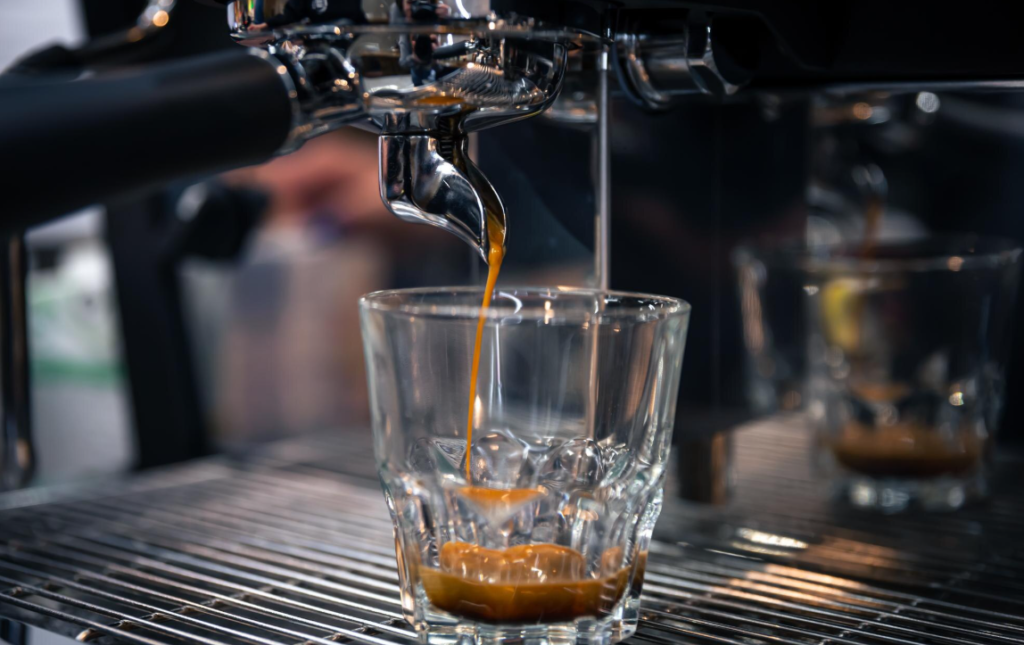
Espresso is a completely different production method and requires completely different equipment. A pressurized machine forces hot water, again around 195 to 205 degrees, through a tightly packed puck of very finely ground coffee at approximately nine bars of pressure. Nine bars means nine times the pressure of the Earth’s atmosphere at sea level. This happens in about 25 to 30 seconds. The result is a very small volume of liquid, typically one to two ounces, that is dense, concentrated, and covered with a layer of emulsified oils and CO2 called crema.
The grind for espresso must be very fine, almost powder-like but not quite. If the grind is too coarse, water passes through too fast and the shot is under-extracted, sour and thin. If the grind is too fine, water cannot pass through at all, or the extraction is too slow and the shot becomes bitter and harsh. This is called the extraction window, and hitting it consistently is one of the core barista skills at any serious specialty coffee San Francisco cafe or artisan coffee Bay Area operation.
The Chemistry Inside Each Cup
This is where the education gets genuinely interesting. Drip coffee and espresso do not just differ in brewing method. They differ in what ends up in the liquid you drink, and that difference has real effects on flavor, body, and how your body processes the caffeine.
Drip coffee is a filtered brew. The paper or metal filter catches most of the coffee’s oils and fine particles, producing a clean, transparent liquid. The oils in coffee carry a significant amount of flavor but also contain compounds called diterpenes, specifically cafestol and kahweol, that affect cholesterol levels when consumed in large amounts. Filtered drip coffee removes most of these, which is why nutritionally, filtered drip coffee is considered one of the gentler options for people monitoring cardiovascular health.
Espresso is an unfiltered brew in the sense that there is no paper filter removing oils. The fine mesh basket in the portafilter catches grounds but allows oils to pass through into the cup. This is why espresso has that rich, almost syrupy body and why the crema on top looks the way it does. The crema is a foam of emulsified oils, fine particles, and carbon dioxide released from freshly roasted beans under pressure. It adds texture and complexity to the taste and is one of the most visible indicators of espresso quality.
Caffeine content is where the common assumption most people hold gets turned on its head. Espresso has more caffeine per ounce than drip coffee, but drip coffee almost always has more total caffeine per serving because the serving size is so much larger. A single one-ounce espresso shot contains roughly 63 milligrams of caffeine. A standard eight-ounce cup of drip coffee contains between 80 and 120 milligrams. A double shot of espresso brings you to around 126 milligrams, which is roughly comparable to a large drip coffee.
The speed at which caffeine reaches your bloodstream differs too. Because espresso is consumed quickly in a small volume and contains a high concentration of caffeine relative to liquid, many people experience its effects faster. Drip coffee is consumed more slowly over a longer period, which produces a more gradual caffeine absorption. This partly explains why espresso feels like a sharper, faster hit while a morning cup of drip coffee feels like a slower, steadier lift.
Here is a side-by-side comparison that makes the key differences easy to reference:
- Brewing time: Drip takes 3 to 5 minutes, espresso takes 25 to 30 seconds
- Pressure used: Drip uses gravity only, espresso uses 9 bars of pressure
- Grind size: Drip uses medium grind, espresso uses very fine grind
- Serving size: Drip is 8 to 12 ounces, espresso is 1 to 2 ounces
- Body and texture: Drip is clean and light, espresso is dense and syrupy
- Oils in the cup: Drip filters most oils out, espresso retains them
- Caffeine per ounce: Espresso is higher, drip is lower
- Caffeine per serving: Drip typically delivers more total caffeine
- Crema: Only present in espresso, absent in drip
- Skill required: Drip is forgiving, espresso requires precise calibration
Choosing What You Actually Want
Flavor-wise, the differences between espresso and drip coffee are real and consistent. Drip coffee tends toward a cleaner, lighter profile that highlights the origin character of the beans. A well-made pour-over of an Ethiopian Yirgacheffe will show you floral, citrus, and berry notes that you would not necessarily pick up in an espresso of the same beans. This is because the filtering process and lower pressure extraction produce a more transparent flavor profile with less interference from oils and extraction intensity.
Espresso tends toward richness, caramelization, and depth. The high pressure extracts flavor compounds quickly and concentrates them into a small volume, which produces bold, complex flavors with a thick, coating texture. Notes of chocolate, dried fruit, nuttiness, and caramel are more common in espresso than in drip coffee of the same beans. Roast level affects both drinks significantly, but dark roasts are more commonly associated with espresso because the flavors they produce, bold and bittersweet, translate well under pressure extraction.
For food pairings at a San Francisco brunch restaurant or top SF restaurants for brunch, each drink has its natural match. Drip coffee pairs well with sweeter or more delicate foods, like pastries, fruit dishes, avocado toast, or lighter egg preparations, because its clean flavor does not compete with subtle food flavors. Espresso and espresso drinks handle richer, heavier foods well, like full brunch plates, savory egg dishes, and anything with cheese or cured meat, because the intensity of the coffee cuts through richness and resets the palate between bites.
At Doppio Coffee & Brunch on Mission St, both worlds are represented well. The Lavazza espresso program produces handcrafted espresso drinks with the kind of consistency and skill that specialty espresso bars in SF are known for, and the all-day brunch menu built on seasonal ingredients gives you plenty of great food to pair with whatever you choose to drink. The cozy stylish interior on Mission St makes it easy to slow down and appreciate the difference between a well-pulled shot and a clean, careful pour-over. Takeout is available for mornings when you need your coffee and brunch food on the go, and the quality holds up whether you are eating in or taking it with you.
Knowing the difference between espresso and drip coffee makes you a more informed drinker and a better cafe visitor. The next time you are searching for the best coffee in San Francisco, looking for SF foodie spots to add to your weekend list, or just standing at a counter wondering what to order, let that knowledge guide you toward whatever actually fits the morning you are having. That is what good coffee culture is really about.