
How Is Matcha Made?
Most people who order a matcha latte at a San Francisco cafe have never thought about what actually went into making the green powder sitting in that tin behind the counter. They know it is made from tea. They know it is green. They know it tastes different from coffee and makes them feel different too.
But the process that transforms a living tea plant growing in a shaded field in Japan into the fine, vivid powder that gets whisked into a drink at a good SF brunch spot is long, careful, and genuinely fascinating. Understanding it changes the way you experience the drink and explains why quality varies so dramatically between a cheap grocery store version and what you find at a specialty cafe that takes its ingredients seriously.
The process of making matcha is not a recent industrial invention. It developed in Japan over centuries, refined by tea masters, Buddhist monks, and agricultural communities who understood that every stage of production shapes the final cup. Today, the best producers in Japan still follow methods that have been passed down through generations, with modern equipment used at certain stages but the fundamental approach remaining rooted in tradition. The result is one of the most labor-intensive food products in the world, which is why genuine, high-quality matcha is expensive and why the difference between real quality and a low-cost imitation is so dramatic in both flavor and effect.
Growing and Shading: Where Quality Begins
The matcha production process starts not at harvest but weeks before it, with a practice called shading. This is the step that separates matcha from all other green teas and is responsible for most of its distinctive characteristics, including the vivid color, the sweet and savory flavor, and the high concentration of L-theanine that produces the calm, focused energy the drink is known for.
Tea plants used for matcha production are typically cultivated in specific regions of Japan where the soil, climate, and centuries of agricultural knowledge combine to create ideal growing conditions. Uji in Kyoto Prefecture is the most famous of these regions, with a history of tea cultivation stretching back to the twelfth century. Nishio in Aichi Prefecture, Yame in Fukuoka, and Kagoshima in the south are also respected origins, each producing leaves with slightly different flavor characteristics shaped by their local terroir.
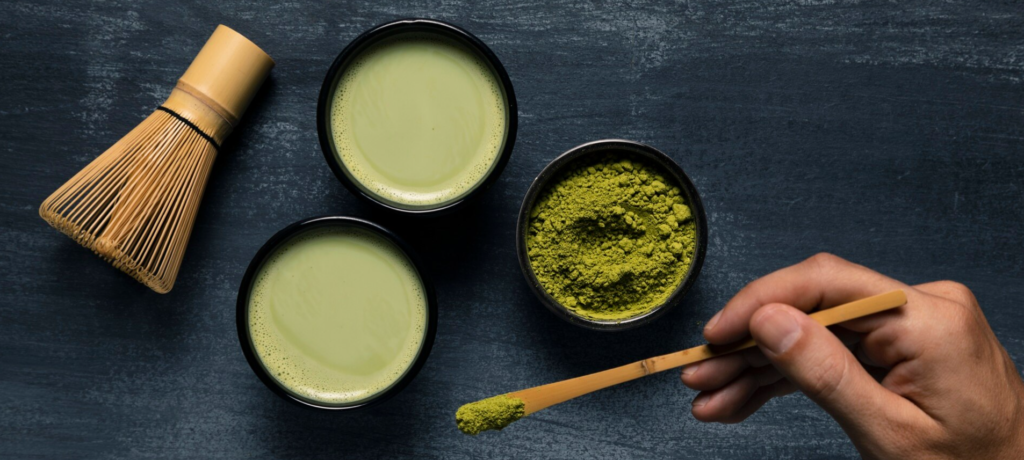
Approximately three to four weeks before the scheduled harvest, farmers cover the tea plants with shade structures. Traditional shading used rice straw laid over bamboo frames, creating a filtered, diffuse light environment. Modern producers often use purpose-made shade cloth that blocks around 90 percent of direct sunlight while still allowing some light to reach the plants. The effect of this reduced light exposure is significant and specific.
Deprived of full sunlight, the plant responds by producing more chlorophyll, which is why matcha leaves are such an intense, saturated green compared to other green teas grown in full sun. The plant also produces more L-theanine, an amino acid that accumulates in the leaves as a byproduct of the plant’s metabolic response to shade stress. L-theanine is responsible for the sweet, savory, umami-rich flavor of high-quality matcha and for the calm mental focus that regular drinkers associate with the drink. The longer and more complete the shading, the higher the L-theanine content and the more pronounced these qualities in the finished powder.
During the shading period, the plants are carefully maintained. Farmers monitor the health of the leaves, manage pest pressure, and adjust the shade structures as needed. The shade period is demanding on the plants because reduced light means reduced photosynthesis and therefore less energy available for growth. The young leaves that develop during shading are tender, nutrient-dense, and metabolically active in a way that uncovered leaves are not. They are also significantly more perishable, which is why the timing of the harvest after shading is precise.
Harvest, Processing, and the Making of Tencha
When the shaded leaves reach their peak, the harvest happens quickly. The timing matters because the young leaves at their optimal stage of development represent a narrow window. Harvesting too early means underdeveloped flavor compounds. Harvesting too late means the leaves have matured past their most tender and flavorful point. The first harvest of the season, called ichibancha or first flush, is the most prized.
These spring leaves have been growing since the plant broke dormancy after winter, accumulating nutrients and flavor compounds over months. First flush leaves produce the highest grade matcha, with the most vivid color, the smoothest flavor, and the highest L-theanine content. Later harvests produce leaves that are progressively more bitter and less vibrant, which is why second and third flush leaves are used for lower grades of the powder.
Harvesting at the commercial level uses specialized machines that trim the top of the plant to collect the youngest leaves uniformly. At some premium producers, hand-picking is still practiced, which allows for even more selective collection of only the very finest leaves and is one of the reasons that top ceremonial grade matcha from small artisan producers commands exceptional prices. After collection, the leaves must be processed immediately because oxidation begins as soon as the leaf is separated from the plant.
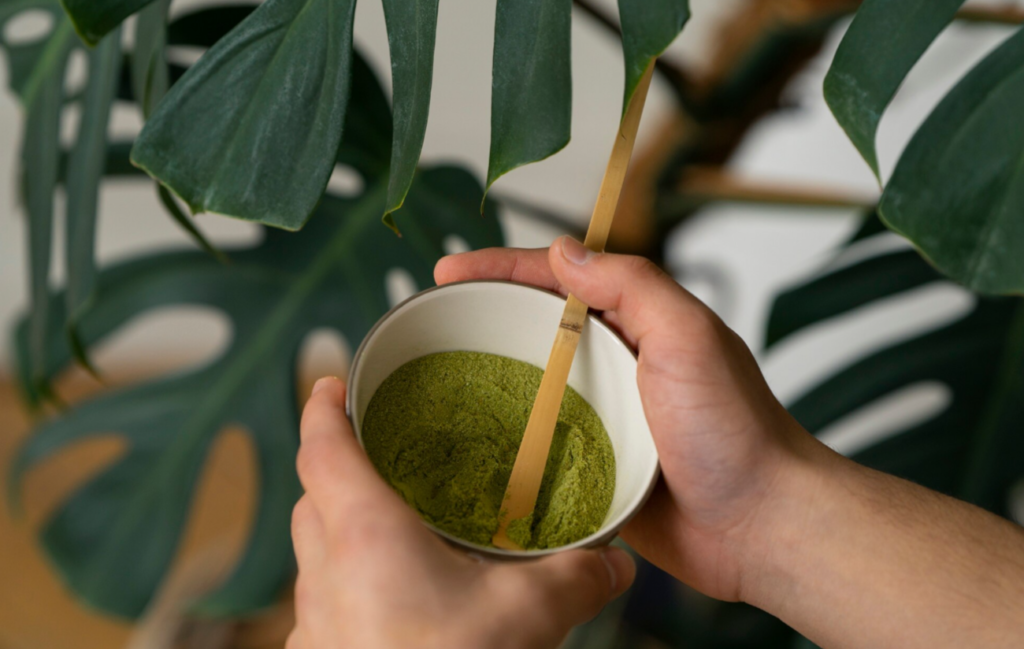
The first processing step is steaming. The freshly harvested leaves are passed through a steam chamber within hours of picking, sometimes sooner. Steam exposure stops the enzymatic oxidation process that would otherwise turn the leaves brown and alter their flavor, the same way that black tea gets its color from deliberate oxidation. By halting oxidation quickly, steaming preserves the chlorophyll content and the fresh, grassy, sweet flavor profile that distinguishes green tea and matcha from oxidized teas. The duration of steaming affects the final flavor in ways that producers control carefully. Shorter steaming, called asamushi, produces a lighter, more delicate flavor. Longer steaming, called fukamushi, produces a deeper, more full-bodied character.
After steaming, the leaves are dried. This can be done using hot air in a rolling dryer or through more traditional methods depending on the producer. The goal is to reduce moisture content to a stable level that prevents spoilage and prepares the leaves for the next stage of processing. Once dried, the leaves go through a process called sorting and de-stemming. The stems and leaf veins are mechanically separated from the flat leaf material.
This is a step that only applies to matcha production and does not occur in the production of other green teas. The stems and veins are removed because they have a different texture, flavor profile, and fiber content than the leaf surface. Including them in the final powder would produce a coarser, more bitter product with less of the smooth, umami character that defines quality matcha. The leaf material that remains after de-stemming is called tencha, and it is at this point that the raw material becomes specific to matcha rather than being a precursor to any other kind of tea.
Grinding: The Final and Most Delicate Step
Tencha on its own is not matcha. The transformation from dried, de-stemmed leaf fragments into the fine, silky powder that gets whisked into a latte happens through stone grinding, and this step is where the process becomes most demanding and most precise.
Traditional matcha grinding uses granite stone mills. Two circular stones, one fixed and one rotating, are positioned with a very small gap between them. Tencha is fed slowly into the center of the upper stone and works its way outward through the gap as the stone rotates, being ground progressively finer as it moves toward the outer edge. The stones are shaped and maintained with great care. The grooves cut into the grinding surface, called furrows, are arranged to move the tea outward and progressively reduce particle size. The angle, depth, and pattern of these furrows are the proprietary knowledge of skilled millstone craftspeople and are critical to producing a consistent, fine powder.
The rotation speed of the stone mill is kept deliberately slow, typically between 30 and 40 rotations per minute. This seems inefficient, and in terms of output it is. A single stone mill grinding at this speed produces only about 30 to 40 grams of finished powder per hour. To put that in context, a single serving of matcha in a latte uses about 2 to 3 grams of powder, which means one stone mill running for an hour produces enough powder for roughly ten to fifteen cups of tea. For a busy specialty coffee San Francisco cafe or a high-volume Bay Area brunch spot, this scale makes clear why quality matcha is priced the way it is.
The reason for the slow speed is heat. Friction generates heat, and heat damages the delicate flavor compounds and aromatic molecules in the tencha. At high speeds, a stone mill would generate enough friction heat to alter the flavor profile of the powder and degrade the chlorophyll, which would affect both the color and the nutritional quality of the finished product. The slow rotation keeps the temperature stable and the powder cool throughout the grinding process.
The result is a powder with an extremely fine particle size, typically around five to ten microns in diameter. For reference, a human hair is approximately 70 microns in diameter, so high-quality matcha is ground to a fineness that is invisible to the naked eye and gives the powder its distinctive silky, smooth texture.
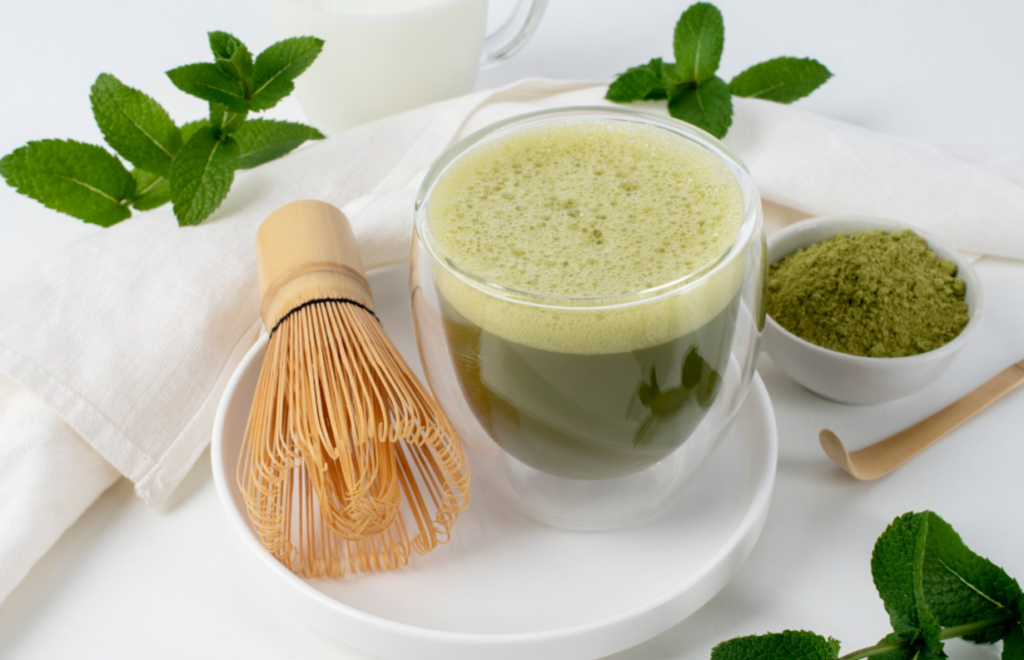
The finished powder is immediately packaged in airtight, light-blocking containers to prevent oxidation and chlorophyll degradation. From this point, the clock is running on quality. Matcha is most flavorful and most nutritionally potent within the first few months after grinding, which is why harvest dates on packaging matter and why good producers and cafes rotate their stock carefully.
At Doppio Coffee & Brunch on Mission St, this kind of attention to ingredient provenance is reflected in the all-day brunch menu and the drinks program built around seasonal, quality ingredients alongside Lavazza espresso. The cozy stylish interior on Mission St creates exactly the kind of environment where a well-made matcha latte, prepared with powder that has been properly sourced and freshly used, is the right drink for a slow morning.
Whether you are a regular at Bay Area brunch spots, someone exploring San Francisco food for the first time, or simply looking for a cafe near you that takes every ingredient seriously, understanding the process behind what is in your cup makes the experience more meaningful. Takeout is available for days when you need to move quickly, but the drink travels well and the quality holds.
The next time you order a matcha latte at a good SF cafe and notice the vivid green color, the smooth texture, and that distinctive sweet umami flavor, you are experiencing the result of shaded fields, timed harvests, careful steaming, patient stone grinding, and centuries of refined agricultural practice. That is a lot in a small cup, and it is entirely worth appreciating.