
Matcha vs. Green Tea: What’s the Real Difference?
You have probably seen both on café menus for years. Green tea sits quietly in its category, familiar and reliable. Matcha has become something of a phenomenon, showing up in lattes, pastries, ice cream, and on the feeds of every Bay Area foodie guide worth reading. They both come from the same plant. They are both green. But beyond those two facts, they are genuinely different drinks with different flavor profiles, different preparation methods, different nutritional compositions, and different reasons why people love them. If you have ever wondered what actually separates the two, this guide covers everything worth knowing.
San Francisco food culture has always been curious and health-conscious in equal measure. The city’s café scene has embraced matcha alongside specialty coffee San Francisco regulars have loved for years, and today you can find both at the best cafes in the Bay Area sitting comfortably on the same menu. Understanding the difference between matcha and green tea helps you order what you actually want, appreciate what you are drinking more fully, and get the most out of whichever one ends up in your hands.
Where They Come From and How They Are Made
Both matcha and green tea come from the Camellia sinensis plant, which is the same plant used to produce black tea, oolong, and white tea. The difference starts with how the plant is grown and how the leaves are processed after harvest.
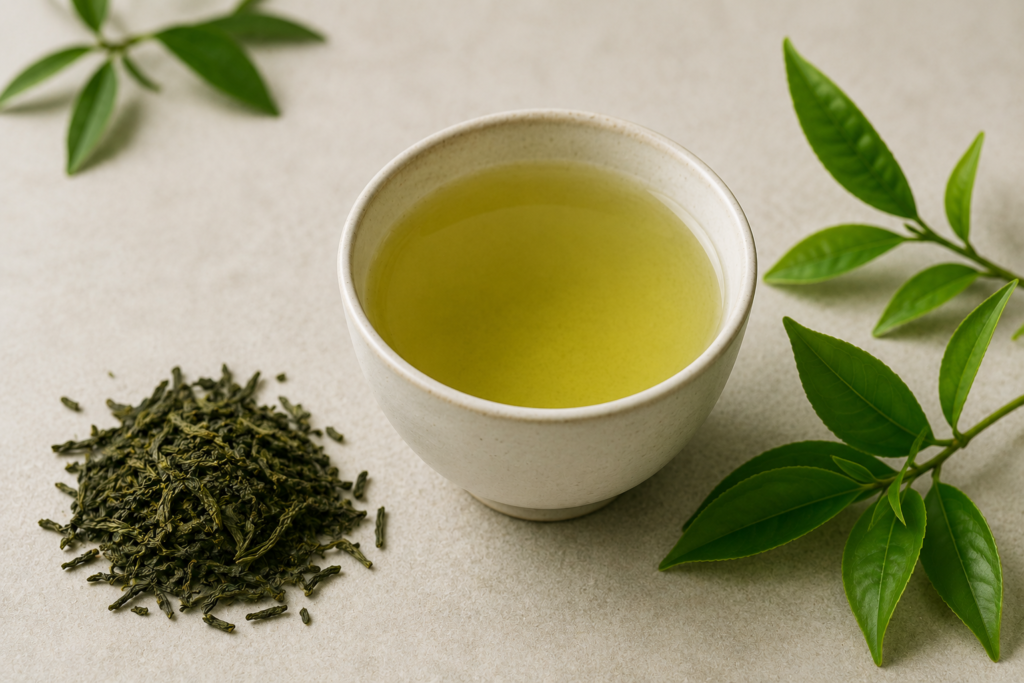
Regular green tea is made from leaves that are grown in full sunlight, harvested, quickly heated to stop oxidation, dried, and then steeped in hot water. The steep produces a light, clear or pale yellow-green liquid with a mild, grassy flavor. The leaves themselves are discarded after steeping, which means you are only getting the water-soluble compounds that made it into the cup during that brief contact time.
Matcha is a different process from the ground up. About three to four weeks before harvest, the tea plants are shaded from direct sunlight, usually by covering them with fabric or bamboo screens. This shading changes the plant’s chemistry. Deprived of full light, the plant produces more chlorophyll, which gives matcha its vivid, deep green color, and more L-theanine, an amino acid that contributes to the calm, focused feeling matcha drinkers often describe. After harvest, the leaves are steamed, dried, and then very slowly stone-ground into a fine powder.
When you drink matcha, you are consuming the entire leaf in powdered form, not just an infusion of it. This is a big part of why matcha behaves differently in the body and why it tastes so much more intense than brewed green tea. You are getting everything the leaf contains, not just what dissolved into the water during steeping.
Here is a side-by-side look at the key differences in how each is produced:
- Green tea: grown in full sun, leaves steeped in water and discarded, light flavor and color
- Matcha: shade-grown for several weeks, entire leaf ground into powder, consumed whole
- Green tea processing: minimal, heat applied quickly to preserve freshness
- Matcha processing: shading, steaming, drying, and slow stone grinding over hours
- Green tea color: pale yellow to light green depending on variety
- Matcha color: vivid, deep green from elevated chlorophyll
Flavor, Caffeine, and How Each One Feels
The flavor difference between the two is significant. Green tea tastes grassy, light, and slightly sweet with a clean finish. The flavor is subtle and pleasant, which is part of why it has been a daily drink across East Asia for centuries. It is easy to drink, easy on the stomach, and pairs well with food without competing for attention.
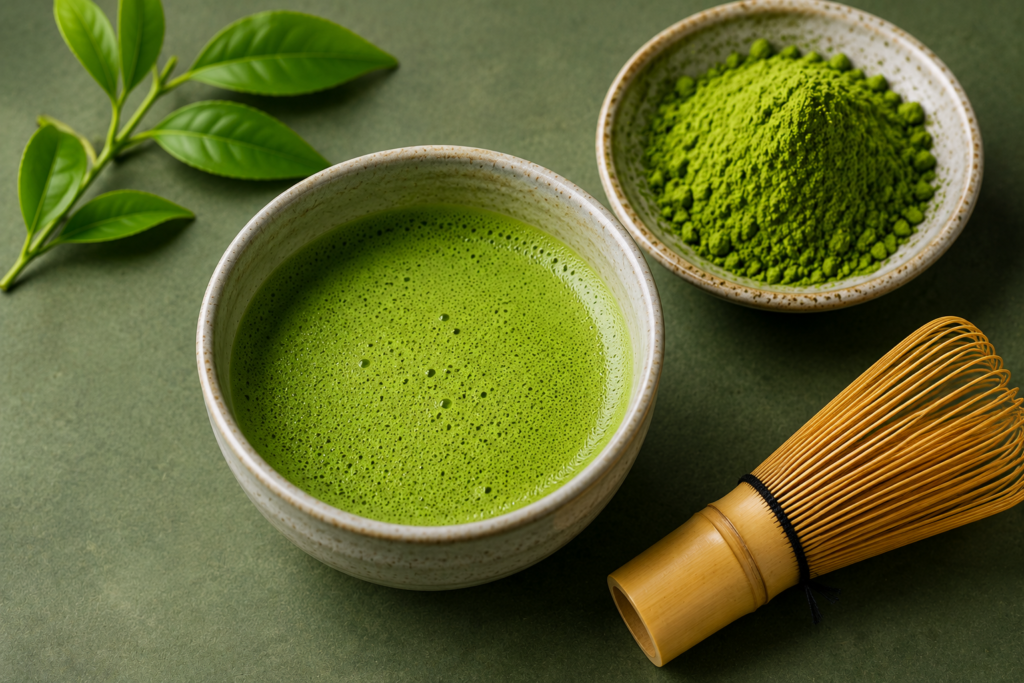
Matcha has a much more intense flavor. It is earthy, rich, and slightly bitter with a natural sweetness underneath, especially in higher-grade ceremonial matcha. The umami quality of matcha, that deep savory richness, comes from the high concentration of amino acids developed during the shading period. When prepared correctly with good quality powder and the right water temperature, matcha has a complexity that surprises people who have only had it in sweet, heavily modified latte form.
Caffeine is another area where the two diverge. A standard cup of brewed green tea contains roughly 25 to 40 milligrams of caffeine. A serving of matcha contains significantly more, typically between 60 and 80 milligrams per gram of powder used, because you are consuming the whole leaf rather than a diluted infusion. This makes matcha a meaningful alternative to coffee for people who want a caffeine boost without the intensity of a full espresso.
The way matcha’s caffeine feels is also different from coffee and from regular green tea. The high L-theanine content in matcha works alongside the caffeine to produce a state that many people describe as alert but calm. There is energy without jitteriness, focus without the sharp spike and crash that can come from a strong espresso on an empty stomach. This is one of the reasons matcha has become popular among people who want to stay sharp at work or in a study session at one of the best cafés for studying in San Francisco without feeling overstimulated.
Grades, Quality, and What to Order
Not all matcha is the same, and understanding the basic grade system helps you know what you are getting. Ceremonial grade matcha is the highest quality. It is made from the youngest, most tender leaves and ground to an extremely fine powder. The flavor is smooth, complex, and sweet enough to drink on its own in just hot water without any sweetener. It is what traditional Japanese tea ceremony uses and what premium café matcha drinks are made from when quality is a priority.
Culinary grade matcha is lower quality, slightly more bitter, and designed to be used in cooking and baking or blended into drinks with milk and sweetener. It is fine in a matcha latte where other flavors are present, but it lacks the subtlety and sweetness of ceremonial grade when tasted on its own. Many cafés use culinary grade for their matcha drinks because of cost, and the difference shows in the flavor if you pay attention.
When ordering a matcha drink at a café, a few small things improve the experience. Asking whether the matcha is whisked properly rather than just stirred into cold milk makes a real textural difference. Properly whisked matcha is smooth and frothy, with no clumps. Asking for less sweetener, or none at all, lets the natural flavor of the matcha come through more clearly. Trying it prepared as a traditional thin tea in just hot water at least once gives you a baseline for what good matcha actually tastes like before it gets blended into a drink.
For coffee drinkers who are curious about matcha but not ready to give up their morning espresso, a matcha latte alongside a coffee drink is a perfectly reasonable way to explore both. The best cafes in the Bay Area often have both on the menu with equal care applied to each, and alternating between the two across a week gives you a real sense of how differently each one makes you feel.
Doppio Coffee & Brunch on Mission St in San Francisco takes the drinks menu seriously alongside the food. The Lavazza espresso there is made with the same level of attention that a good matcha preparation deserves, and the cozy, stylish interior makes it a comfortable place to sit and try something new without feeling rushed. The all-day brunch menu built around seasonal ingredients means there is always something good to eat alongside your drink, whether you are coming in for a slow weekend morning with friends, a weekday solo session at a corner table, or a quick takeout stop on your way through the Mission.
San Francisco café culture has made room for both coffee and matcha with equal enthusiasm, and that is a good thing for anyone who loves a thoughtfully made drink. The best SF foodie spots treat their beverage menu as seriously as their food, and a well-made matcha latte or a properly brewed cup of green tea holds its own next to a great espresso in any space that cares about what it serves. Knowing the difference between the two makes every order more intentional and every sip more enjoyable, and in a city that rewards that kind of attention, that is exactly the point.